A300 Pruning standards recognize four basic pruning methods for pruning:
- Clean: Selective pruning to remove one or more of the following parts: dead, diseased, and/or broken branches.
- Thin: Selective pruning to reduce density of live branches
- Raise: Selective pruning to provide vertical clearance.
- Reduce: Selective pruning to decrease height and/or spread (consideration must be given to the ability of a species to tolerate reduction pruning).
Some of the types of pruning we can do for you include Structural Pruning, Aesthetic Ornamental Pruning, and Orchard Pruning.
Below are examples of past pruning work.
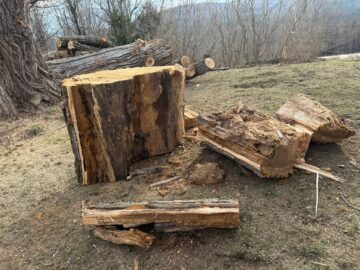
The Knoll Farm Cottonwood
More Than 20 Years of Care for a Vermont Landmark For more than two decades, Whitney Tree Service had the privilege of caring for the historic cottonwood at Knoll Farm in Fayston, Vermont. The cottonwood was a prominent feature of the Knoll Farm landscape and a familiar landmark to generations of visitors. Planted around 1910, the enormous cottonwood was once recognized as the largest tree of its species in Vermont. A 2007 article in The Valley Reporter documented the tree at more than 123 feet tall, with a trunk diameter of 87 inches and a crown spread of approximately 90 feet. Our relationship with the tree began around 2004 when Anne Day, a longtime naturalist and former owner of Knoll Farm, hired Adam Whitney to help preserve and care for it. Over the years, Whitney Tree Service returned to prune and maintain the cottonwood, helping extend the life of this remarkable tree.…
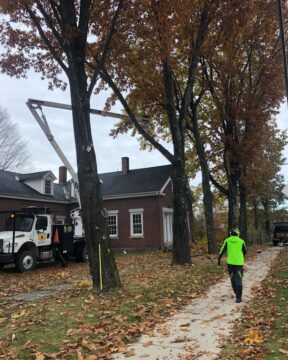
Main Street Oaks in Waitsfield
Worked on the big oaks along Main St in Waitsfield today. Although they might look fine their roots were badly damaged during sidewalk construction.


